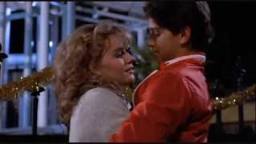
It was the face that first reminded me, then the voice. Older, a little heavier, guest starring on a re-run of Saving Hope, it was Paul Soles. He played a senior in hospital suffering Alzheimer Disease and posing a danger to himself and his wife. But when I was growing up, every Saturday morning I knew him only as the voice of Spiderman. At the time, I did not know it though. Instead, Paul Soles played a very different role.
The face with no voice: That darn Lawbreaker
If you grew up in the late 1970s and early 1980s, Paul Soles was one of those Canadian actors you saw on CBC whether it was "This is the Law" or "Take 30".
I remember him best as the lawbreaker on "This is the Law". It was a panel show hosted by Austin Willis (who I remember best playing CIA agent Felix Leiter in the James Bond movie Goldfinger). The premise was simple if memory serves. There were cases or laws that were acted out, then the panel would have to guess what the law was that was broken. Soles played the man who always broke the law. Interestingly, he never spoke. There was no dialogue during the crime enactments.
The show first aired in the 1970s, but I remember watching reruns of "This is the Law" one summer when I spent a couple weeks visiting my cousins in Brooks. What was really weird was they knew one of the actual cases the show talked about. It came from the town they lived in before they moved to Brooks.
The voice with no face: Spiderman
What is really ironic about Paul Soles never speaking in "This is the Law" is that his voice was his bread and butter. He did tons of voiceover work, but I remember him best as the voice of Spiderman on Saturday morning cartoons, and a bit from Rocket Robin Hood.
Brought to you by your friendly neighbourhood Spiderman
Every Saturday I would watch Spiderman. There were so many cool villains: the Vulture, Electro, the Green Goblin, Dr. Connors, Dr. Noah Body, Parafino, Dr. Octopus, the Rhino. The show changed over time. Episodes became more dark visually as well as in plot. All those great villains were early on. The later episodes were more about other dimensions and a lot more science fictiony.
I never saw them first run, only in repeats. You could tell what season they were from by the opening credits. If the title was set in a big spider web with a light background of the city skyline, it was early in the run.
If the title was on a black background that looked like a dock, it was one of the dark, foreboding episodes.
I never saw a full episode of Take 30, just commercials advertising Soles hosted the show with Adrienne Clarkson. The show was on during the day when I was in school.
The only other vivid memory I have of Paul Soles was when he guest starred in a Wayne and Schuster special. It was a spoof of Murder on the Orient Express and included the panelists from Front Page Challenge as well. Another interesting connection. Paul Kligman was a regular member of the Wayne and Schuster ensemble. He also did the voice of J. Jonah Jameson on Spiderman.
It really is funny how Paul Soles' best known characters only utilize a part of him. He's either all voice, or pantomime. In his case it seems the sum of his parts is greater than the whole.
Every so often I have seen movies that profoundly affect me. They touch me on some deeper level I am not really sure I can explain. The first ever movie to do that was The Karate Kid.
Going to the movies
It was the summer of 1984. Every year I would spend two weeks in Brooks at my Aunt Monica’s with my cousins Henry, Fred, and Bobbi. That summer Henry spent some time with a friend of his who had moved to Red Deer. He came back, just before I went home, raving about a movie he had seen. It was called The Karate Kid.
It would have a really big impact on me.
It was advertised a lot. I remember the tag line that ended every commercial: “The Karate Kid – it’ll go straight to your heart”. And it did. The movie was playing at College Cinema, which was a two-screen theatre located in a mall on the south edge of Lethbridge anchored by Woolco. Up to that point, I did not have a licence, so the only time I ever got off the farm to see a movie was with my sister Barb. She had seen the commercials too, and was game.
Even getting into the movie was funny. When we got there, the tag line on the billboard above the entrance was: “The Karate Kid – it is his moment of truth”. We always got there a few minutes early in case there was a line. Back then, I looked a lot older than I was. At the time I was 14. When we bought tickets, my sister said, “One adult and one child.” Children were 14 and under.
“Excuse me ma’am,” the girl working the front said. “But where is your child?”
She really was not much older than me, still in high school for sure.
“I’m the child,” I said.
The look she gave me was utter disbelief.
“Um,” she hesitated. “Do you have ID?”
Of course I didn’t. What 14-year-old has ID? The closest thing was my learner’s permit, but that was at home. I didn’t even carry a wallet until the next year. She gave me the benefit of the doubt and let me in.
I still cannot believe I was ID’ed for being too old. Virtually everyone else I knew was ID’ed for being too young, not too old.
We grabbed a seat, and immediately were irritated by two guys sitting behind us. They just did not stop talking. About 20 minutes into the movie me and Barb moved seats. It was the only time I can recall ever having to move seats. Before we left I gave those guys a dirty look and mumbled something under my breath. It’s too bad it was pitch black.
The Karate Kid
Everything Daniel Larusso has learned culminates in this moment Source:https://www.engadget.com /2017/08/04/karate-kid-reboot-youtube-red-2018/
(may be subject to copyright)
The movie was just absolutely amazing. I have always loved underdogs and this was the ultimate underdog story. To say Daniel Larusso got bullied was an understatement. He got the tar beat out of him at every turn in the first half of the movie. You couldn't help but feel for the guy. It wasn't the violence – it was the loneliness, and the helplessness. He had nowhere to turn. Then he met Mr. Miyagi who had his own demons to wrestle with. A boy without a father, a man whose son had died long ago. Together, they learned, and grew and helped each other deal with their pain. Then, to watch Daniel come back, get revenge on all the bullies, and learn all the right lessons doing it, was inspiring.
Daniel Larusso discovers he has been learning karate all along
(may be subject to copyright)
Wax on, wax off
And it had one of the best surprises I’d ever seen in a movie. Mr. Miyagi promises to teach Larusso karate. Yet, all Larusso seems to do is chores. First he waxes Mr. Miyagi’s collection of vintage cars. Then he sands his seemingly endless deck. Then he paints all his fences. Finally, he paints his house. Larusso has had enough and confronts his teacher. Suddenly Mr. Miyagi reveals he has been teaching him karate, using muscle memory, all along. It was astonishing to see for the first time. I could hear everyone in the theatre gasp and exclaim, “Ohhhh.” The phrase “wax on, wax off” became slang in our language.
We can all relate
Daniel and Ali, he got the girl in the end Source:www.martialartsentertainment.com/ the-karate-kid-1984/
(may be subject to copyright)
I think The Karate Kid resonated with me because I was about to start Grade 10 at a new school, I was about the same age as Daniel Larusso, and I had a lot of anxieties about high school. I was lonely, insecure, and beginning to like girls, who really didn't seem to return the favour. Larusso found his own way, and he got the girl in the end. It was a lift at the right time.
A comedian gets serious and Oscar comes calling
What made the movie in so many ways was Noriyuki “Pat” Morita. At the time he was a comedian, best known for playing “Arnold”, the owner of the local hangout on “Happy Days”. As Mr. Miyagi, he reveals his wife and child were killed when they were interned during the Second World War. It was a touching moment of social commentary without beating anyone over the head with a message. Before that he was just Pat Morita. I recall reading somewhere at the time that he went back to his Japanese name because the role of Mr. Miyagi had affected him so much.
What surprised me was he ended up getting nominated for an Oscar for best supporting actor for that role. I always point that out when people talk about the movie being schlock or fluff.
Teenage Rocky
At the end of that summer, I remember watching Leonard Maltin, the in-house movie critic on Entertainment Tonight talking about the crop of summer movies that was. The Olympics had just finished in Los Angeles a few weeks earlier. He said The Karate Kid was a bronze medal hit, and called Daniel Larusso a teenage Rocky. I always liked that because Daniel Larusso looked like Rocky Balboa, and talked like a teenage version of the Italian Stallion. I have never found out if that was intentional or not.
One more time
School started and I told all my friends about it. I wanted to see it again, and I knew my sister wouldn’t take me a second time. At the time I hung out a bit with Joe Darveau, and he talked about going to see it. He wanted to see “Red Dawn” too. His Mom and Dad had already seen “Red Dawn” but they would take us to Lethbridge to see The Karate Kid. I cannot describe how difficult an endeavour it was to get off the farm and try and see a movie.
I didn’t see Red Dawn for a few more years. That’s funny because it has just been remade and is to be released shortly.
The pre-Netflix era
The other interesting thing is that back then it was not easy to see a movie after it left the theatre. You usually had to wait a year or more to see it on TV. Later, movies came out on video but not as quickly as they do now. Plus, not everyone owned VCRs. I wouldn’t get my first one for another year. So I had to settle eventually for buying a novelization (I have a whole collection of those, a legacy of the days before movies were on tape), and the soundtrack.
The Karate Kid on vinyl
Funny thing, the main song was “Moment of Truth” by Survivor. Another coincidence. Survivor had recorded “Eye of the Tiger” the theme song for Rocky III just over a year earlier. Now they had recorded the theme song for the teenage Rocky.
“The Moment of Truth” was only played during the closing credits, which was too bad, because it was really good. It didn’t even play in the opening credits when people would have all heard it, and it may have garnered more interest. The song I remember is “You’re the Best” by Joe Esposito. It was the song that played during the climactic karate tournament as Larusso won match after match.
Conspicious by its absence was “Cruel Summer” by Bananarama. That song went nowhere, then the movie breathed new life into it. When I got the record, I noticed it was missing, and questioned my memory. I thought every song made it to the soundtrack. Must have been some sort of copyright thing.
Always look him in the eye
The movie poster I bought at Con-version
Source:www.martialartsentertainment.com/
the-karate-kid-1984/
(may be subject to copyright)
The next summer, I went to a science fiction convention in Calgary called “Con-version”. They had a Hucksters room in there, and I ended up buying a Karate Kid poster. It was one of the promotional ones that hung in a theatre lobby. It was an extreme close-up of Daniel and Mr. Miyagi staring at each other. Always look him in the eye, Mr. Miyagi said.
Finally a version I could own
Once it was out on tape, then DVD, I bought it. Every time I see it playing on TV, I watch it. It was on Encore Avenue recently which is the motivation for this post.
The other Karate Kid, and a familiar sound
A couple odd things I discovered in my myriad viewings. One, the makers of the movie had to pay DC Comics for permission to use the name “The Karate Kid”. He was a hero, part of the Legion of Super Heroes, which I actually read as a boy. Two, I wondered about the flute music that played around Mr. Miyagi and his home. It actually was done by that master of the pan flute – Zamfir. He had become famous on infomercials in the 1980s.
A lasting impression
The legacy of The Karate Kid is clear. It is an exceptionally well-made feel-good movie. We can all relate to a boy who is bullied when he’s just trying to fit in. He meets a man broken in his own way, and together they heal. Mr. Miyagi teaches Larusso karate not to get revenge or to fight, but so he doesn’t have to fight. He teaches him to be himself and treat people with respect. And the guy gets the girl in the end.
It was so good, they made it again. But that’s for another time.
Source: http://www.rickstv.com/seeing/ (may be subject to copyright)
"Dreams are for the night time
Days are wide awake
Visions are for a crazy man – not me for goodness
sake…
'Cause I'm seeing things"
-from the
opening credits to "Seeing Things"
Seeing Things in the 21st century
What would it be like to read a person's mind, or
foresee the future? Given that I am the editor of a small-town newspaper, I
sometimes wonder if it would make my job easier, or just more complicated.
Beyond knowing if someone was lying, or knowing in advance of some event, I
think it would be a case of "too much information" in the truest
sense.
Source: http://www.rickstv.com/seeing/
(may be subject to copyright)
The other day I was thinking about "Seeing
Things". Do you remember it? Sunday nights on CBC for six years. It
starred Louis Del Grande as Louis Ciccone, a reporter for a Toronto newspaper
who one day has a fragment of a psychic vision about something he is
investigating. As the investigation proceeds, the vision gets clearer and more
detailed until he solves the case. Through it all, he grapples with his wife
who keeps kicking him out and taking him back, the fact he can't drive, and he
keeps getting in the way of the police and Crown attorney Heather Redfern. Oh,
and no one can seem to pronounce his name.
It was a great show, one that was uniquely
Canadian. The plots were set in Toronto, and there were constant references to
Canadian culture, be it sports, politics, or the occasional dig at the CBC. Del
Grande had been a writer for American network TV who came north. His real life
wife Martha Gibson, played his beleaguered wife Marge, and Janet Laine Green
played Redfern. They fashioned some sort of bizarre triangle, that was amusing
but not that tense.
The show ran its course, and it was one of the
first shows I recall that had an actual final episode. Unfortunately, Del
Grande could never replicate this success. Still, it was one of the better
Canadian dramas about Canada.
And you know, after recalling what kind of a
shambles Louis Ciccone's personal life was, and how he ended up using his own
wits, intelligence, investigative instincts, and powers of deduction to solve
cases anyway, I'm pretty sure I never want to be psychic.
Dan Pastorini, Houston Oiler quarterback and actor Source: http://houston.culturemap.com/news/sports/ (may be subject to copyright)
Gladiator to Spartacus
Recently we were talking about the movie "Gladiator" where Russell Crowe played General Maximus, the soldier who became a – well – gladiator.
A buddy of mine compared Maximus to the real-life Spartacus.
"Russell Crowe is no Dan Pastorini," I joked.
My buddy had the most perplexed look on his face.
"Who is Dan Pastorini?" he asked.
"Why, he played Spartacus in 'Voyagers!'" I said. "But that was not his only claim to fame."
"What's 'Voyagers!'?" my buddy asked. "And who again is Dan Pastorini?"
Athlete becomes actor
Dan Pastorini played quarterback for the NFL's Houston Oilers. That team was led by Earl Campbell, this punishing running back who preferred to run over opponents than around them. Often Pastorini's role was to transfer the ball from the centre to Earl Campbell. However, he was a decent passer too, when called upon. Together, they led the Oilers to back-to-back AFC Championship games where they lost to the Pittsburgh Steelers, who went on to win back-to-back Super Bowls.
The Oilers traded Pastorini to the Oakland Raiders for legendary quarterback Kenny "The Snake" Stabler. Both teams, I think, were hopeful their new quarterbacks would put them over the top to win the Super Bowl. Pastorini broke his leg with four games gone in the season, paving the way for Jim Plunkett to lead the Raiders to an AFC Wild Card playoff berth and all the way to the Super Bowl championship. I don't think Pastorini played another game for the Raiders.
Pastorini in battle as Spartacus on "Voyagers".
(may be subject to copyright)
However, he had been doing some acting too. I recall seeing him do a guest spot on "Fantasy Island", playing a – you guessed it – quarterback who just couldn't get out of a funk, until he meets a woman who helps him straighten out his game. Along the way, they find love. The girl was played by Patricia McCormack who also starred in "The Ropers", as their next door neighbour.
Then, I saw him play Spartacus on "Voyagers!"…
Meeno Peluce (at left) and Jon-Erik Hexum, the stars of "Voyagers"
Source: https://en.wikipedia.org/wiki/Voyagers!
(may be subject to copyright)
Bogg, Jeff Jones, and the Omni
"Surely you remember 'Quantum Leap'," I said.
My buddy nodded.
"'Voyagers' was 'Quantum Leap' before there was a 'Quantum Leap'," I said.
Phineas Bogg (Jon-Erik Hexum) was a "Time Cop". He travelled through time fixing what went wrong. He was aided by an omni, which looked like a pocket watch. Whenever it blinked red, there was something wrong that he had to fix. He knew he succeeded when the omni turned green.
The show opens with Bogg inadvertently crashing through the window of young Jeff Jones (Meeno Peluce). The omni was never supposed to take him that far in the timeline, but malfunctioned. Worse for Bogg, he loses the omni's instruction book. Bogg saves Jeff's life and Jeff helps Bogg in his job to fix what went wrong. Since Jeff has no real ties to the present, and he happens to be a history whiz, a partnership is born. Albeit a short-lived one because "Voyagers!" only made it through one season.
This was the disadvantage of peasant vision. The show debuted Sunday nights on NBC in the fall. I caught an episode when I was visiting my cousins Nina and Carl in Lethbridge. They had cable TV, and I always looked forward to visiting them. By the time it hit Channel 7 on the farm, the show had already been going for months, and would be cancelled by NBC. It was a bit disheartening knowing the shows I saw were the only ones they ever made. There would be no more.
There were some really interesting stories though.
Where are they now?
Sadly, a couple years later Jon-Erik Hexum was killed in an accidental shooting during the production of the adventure show "Cover Up". Hauntingly, the show was part of a Saturday night line-up plagued by tragedy. "Airwolf" had a crash on set, while the star of "Mike Hammer", Stacy Keach, was sent to jail on drug charges.
Meeno Peluce is a face from the 80s you'd recognize, even if you don't recognize the name. He played Tanner Boyle on the short-lived TV version of the "Bad News Bears" and as the son in the equally-short-lived series "Best of the West" (starring Joel Higgins, who went on to star in "Silver Spoons"), and I recall seeing him do guest spots for "Scarecrow and Mrs. King", "Benson", "Love Boat" (didn't everyone guest star in that?) and…"Silver Spoons".
…And back again
By now, my buddy had this glazed-over look on his face.
How did we get from pro football to gladiators to time travel TV shows?
Well, I'm not sure. That's just what having a conversation with me is like.
Never have I been prouder to be an Indianapolis Colts fan then this past weekend when they erased an 18-point halftime deficit to beat the heavily-favoured Green Bay Packers. What brought a tear to my eye was that the Colts had dedicated the game to their coach who was in hospital just a few blocks away battling leukaemia.
Why the Colts?
From 1999 until last year, the Colts were a dominant team, riding the arm of quarterback Peyton Manning. Often when people met me in this period they assumed I cheered for the Colts because they were a winner, or because I was a Manning fan. When he went to the Denver Broncos some of those same people assumed I too would transfer my allegiance to the Mile High City. WRONG!
Gary Hogeboom, before "Survivor", although with that offensive line he was a survivor of a different kind Source: fs64sports.blogspot.com/ 2014/04/1986-cowboys-trade-hogeboom-to-colts.html
(may be subject to copyright)
To the people who accused me of being a bandwagon jumper I always retorted, "I've cheered for the Colts since Gary Hogeboom was their quarterback!" The response was often a glazed look, or later, "You mean the guy from 'Survivor'?" I never watched "Survivor" so I left it to Google to confirm it was the same guy. Back then, I had to correct everyone who still thought they were the Baltimore Colts.
My allegiance goes back to 1986, and can even be confirmed by a message in my Grade 12 yearbook from Derek Flaman who admonished me for being a Colts fan.
So, why? Like any sports allegiance, it's a story as peculiar as sports itself. The first team I really liked was the Oakland Raiders, back in the late 70s when I was nine years old. I loved Jim Plunkett, and the amazing comeback story he was, overcoming injury and adversity to lead the Raiders to the Super Bowl, the first ever wildcard team to win the championship.
But after that, and as I discovered long before that, they were a winner. I've always liked an underdog. There was none bigger than the 1986 Indianapolis Colts. I picked up their trail in 1986 when they were winless, and threatening to not win a game all year. They fired their coach, and hired Ron Meyer with three games to go, and they were 0-13. I'd seen him coach the New England Patriots and liked him. Plus, here he was, given an impossible task.
Until they went into Atlanta and won. Then they took on Buffalo – and won. In those days, Indianapolis was like an NFL Siberia, so the Colts were never on TV. On peasant vision we never even got games on CTV or CBC until after the Canadian Football League season was over. Even then, we often got the "local" feed, which was usually a Seattle Seahawk game. However, on the last weekend of the regular season, the Colts and the Raiders were on CTV.
Albert Bentley, who still lives on in the Colts backfield in the video game Tecmo SuperBowl football. Source: fs64sports.blogspot.com/ 2015/03/highlighted-year-albert-bentley-1987.html?m=0
(may be subject to copyright)
At first the game held no interest, but the Colts began to move the ball. Then Albert Bentley ripped off a big run, and led his team to victory. I got more and more into the game while I was doing some reading on a Sunday afternoon in front of the TV (back then the NFL had a bunch of Saturday games after the college regular season ended). I remembered Bentley from the 1984 Orange Bowl when he, and Bernie Kosar led their underdog Miami Hurricanes, to an upset over Nebraska and the national championship. (That would be the only time I EVER cheered for the 'canes, but that was before they became what they would become). I wondered what ever happened to Bentley, while I watched Kosar excel with the Cleveland Browns. Now here he was.
Eric Dickerson, in the news again this year as Adrian Peterson went after his single-season rushing record. (may be subject to copyright)
The Colts won that game, finishing the season on a three-game winning streak. Still, my loyalty was not yet cemented. That happened the next season, and I have to admit it was a bit of bandwagon jumping. The NFL had a strike in 1987, and brought in replacement players for three games. Amid all that, there was talk that Eric Dickerson, who was probably the best runningback in the NFL, was sitting out a contract dispute with the L.A. Rams and wanted a trade. The rumour was the Colts were the likeliest team to get him – and they did, acquiring him in a three-way deal with the Rams and Buffalo. So it was kind of cool to cheer for them now, although they had come off that 3-13 season.
Once the strike was over, Dickerson joined the Colts. On the first day he dressed, Bentley rushed for almost 150 yards. I was so stoked. Dickerson would soon assume the lion's share of the rushing load, and the Colts won their division. I was pumped – and hooked. However, they faced none other than my hero Bernie Kosar and his Cleveland Browns in the AFC Divisional Game and they ran all over the Colts.
Still, that cinched it. The Colts were my team, and I have never regretted it.
Do you believe in coincidence, or numerology, or whatever it's called?
One more thing. That first season I cheered for the Colts they went 3-13. Keep that record, and those numbers in mind.
The Colts finished the 1997 season 3-13 which gave them the number one pick in the draft. They took Peyton Manning. The Colts finished 3-13 in 1998, Manning's rookie season. The next year, 1999, they finished 13-3, the single greatest turnaround in NFL history. Then last year, 2011, the Colts lost Manning for the whole season and finished with a record of 3-13, which gave them the first pick in the draft. They took Andrew Luck.
I fully expect the Colts to go 3-13, although 13-3 is still possible.
Whatever their record though, one of this season's wins is maybe the single most inspiring game I've watched them play. It wasn't for them, or stats, or a playoff spot. It was for their ailing coach – and they gave him the game ball.
I just finished watching that new show "Vegas" with Dennis Quaid. It is set in 1960 Las Vegas, focusing on the battle between a sheriff (Quaid) and a mobster who runs a casino (Michael Chiklis). What stood out for me last night, as an 80s man was guest star Jonathan Banks, who played the visiting mob boss.
Who is Jonathan Banks, you ask?
It's funny, the weird things I remember. Banks was a character actor in the 80s who seemed to either play a heavy in every show, or land continuing roles in shows that never lasted. One of the first roles I ever saw him in was "The Gangster Chronicles". He played real-life gangster Dutch Schultz. So, he's come full circle playing a gangster. Weird eh?
"The Gangster Chronicles" did not last long, and like most shows on peasant vision, I watched it after it had already played on cable for awhile. Still, I was enamoured with the show, and gangsters in general. The whole period fascinated me. The protagonists (because it's hard to call any gangsters "the good guys") were three men: Charlie "Lucky" Luciano, Benny Siegel, and Michael Lasker. Luciano and Siegel were actual gangsters. I read in the TV Scene (or whatever the TV guide that came with The Lethbridge Herald was called back then) that Lasker was based on real-life gangster Meyer Lansky.
Source: https://www.nndb.com/ people/145/000033046/ (may be subject to copyright)
They did battle with a bunch of other real-life gangsters, namely the aforementioned Dutch Schultz and Al Capone. One of the most chilling scenes I recall was in jail. Capone had been jailed for tax evasion and someone went to visit him. He received his guest while sitting in the electric chair. It was that old style with the piece the executioner put over the prisoner's head hanging there behind Capone.
It was a strange thing, sympathizing with gangsters. Yet it was compelling, at least for an 11 year old. I do recall that TV Scene article saying the same thing: before you know it, you're cheering for Lucky and the boys.
The show was a mid-season replacement and only lasted a few episodes. What was notable was the actors who went on to other roles later in the 80s. Joe Penny played Benny Siegel, before going on to star for three seasons as Nick in "Riptide", and later as Jake in "Jake and the Fatman". Michael Nouri played Luciano, and would go on to get his big break in "Flashdance" like two years later. Markie Post played Chris Brennan, a love interest, and would go on to spend some time on "The Fall Guy" before landing a role as Christine Sullivan in "Night Court". Louis Giambalvo played Capone, and he's another actor you'd recognize as a bit player in pretty much everything in the 1980s. He also had a recurring role in Madeline Kahn's short-lived foray into the TV sitcom world. (I just Googled "Gangster Chronicles" and totally forgot Brian Benben played Lasker. He's got a pretty good gig now – he plays Sheldon on "Private Practice").
And of course there was Jonathan Banks. He would go on to have a role in the short-lived science fiction series "Otherworld" as Kroll, and I recall seeing him in other stuff, most notably "Hillstreet Blues". It was a blast from the past seeing him on "Vegas" tonight, and cool that he was playing a gangster again, 30 years later.
The summer of 1987 was quickly coming to an end, and I was getting ready to head off to Edmonton to university. I used to play basketball at this outdoor court in Coaldale, usually by myself but sometimes with a couple different buddies.
One night, I'd called my best friend Chris Vining, who had been away working at his dad's place up by Cherhill. I was really excited to see him, because we were inseparable. Besides, he was heading to university with me. We were going to be roommates too.
So, he pulls up in his orange Pinto with this stoic look on his face. I hadn't seen him in awhile, and didn't say too much to him on the phone besides setting a time to play ball. So I was a bit uneasy.
He looked me square in the eye. "I can't believe I'm saying this, but…"
Then he paused.
"I think I like Michael Jackson."
I looked at him, nodded, and with my head held in shame replied: "Me too."
Yesterday was the 25th anniversary of Michael Jackson's "Bad" album. However, back in 1987 he had released a single with Siedah Garrett called "I Just Can't Stop Loving You" and it was really good. Vining and I kind of comforted ourselves with the fact that it was not just Michael Jackson, but a duet.
But then, "Bad" was released and it sat on the charts for more than a year. "Bad" was the next single, but the one that really struck a chord with me was "Man in the Mirror". Jackson was really making a statement with the song and the images in the video were absolutely amazing. It's a history lesson on the 80s, and race relations in general. Everything from Bishop Desmond Tutu crying to a baby being rescued from a well. And the historical figures – my hero Bob Geldof, organizer of Band Aid and Live Aid; Mother Teresa; Dr. Martin Luther King Jr.; Gandhi; people marching to free Nelson Mandela; the lives and deaths of John and Robert Kennedy; the Chernobyl disaster; the nuclear arms reduction talks between Mikhail Gorbachev and Ronald Reagan; Lech Walesa; and so much more. Plus the Michael Jackson video began to show everything wasn't just about Michael Jackson. He makes no appearance at all in this video. He lets the images tell the story. That video really got to me. Check it out:
Genesis of dislike
The dislike I had for Michael Jackson came from a number of odd sources. I never really like things that are overhyped. I started listening to music in Grade 9, so around the latter part of 1983. Jackson's album "Thriller" had come out and it was always on. "Beat It", "Billie Jean", "Thriller" – those songs got vinyl fatigue from every radio station, video show, and junior high dance.
The girls at my school St. Joe's all really liked Michael Jackson, and raved about him. And swooned. That meant they played his tape, and it was only "Thriller" on their ghetto blasters and Walkmans. It was just too much.
And there was this punk on the school bus who used to bug me about my acne. He was a couple years younger, but had no respect whatsoever. He wore one of those red Michael Jackson jackets with countless zippers. The first time he wore it was at Halloween, complete with accompanying black face. Kind of a cool idea. But he wore that jacket every day after. I guess it was Halloween every day. Well maybe just a horror show.
The bottom line was I really didn't like his music. At the time, I was more familiar with his sister Janet who was a teen actress appearing in episodes of Diffr'ent Strokes and Fame, and his brother Jermaine who appeared in a memorable episode of The Facts of Life. It focused on the danger of teenage obsession with stars. And of course The Jackson 5, but that was more a name and I couldn't name one song of theirs. I really hadn't heard of Michael Jackson at all, and really wondered what the big deal was (actually in 1983 it would have been "the big hairy deal").
Bad is good
Then came "Bad". As I got older, some of Michael Jackson's stuff began to grow on me. Really, the benefit of age and distance gave me a new appreciation of his music. I'll never be a fan, but I have come to like those big three hits off "Thriller" and most of "Bad".
"Thriller", the single was known for the epic video. Directed by noted filmmaker John Landis, it was fairly long, but told a great story, had narration by Vincent Price who had starred in many horror movies I watched as a kid, and the makers tried to get it nominated for an Oscar for best short film. It has high production values for its time, and is well worth a look.
"Beat It" was a song I should always have liked, because Eddie Van Halen played guitar on it. I guess I did not really get into Van Halen until a bit later, but I wonder if I had discovered them sooner, if it would have softened my view of Michael Jackson. I doubt it.
"Billie Jean" was a song I did find myself moving to, even back in junior high. It's one of my favourites, along with "Man in the Mirror". CBC Calgary used to have this Sunday morning show called Switchback, hosted by Humble Howard who was a local radio deejay. He used to play old episodes of the Batman TV series (the one starring Adam West and Burt Ward), and play music videos. I usually missed the first part because my Dad took me to church every Sunday morning, but I always caught the tail end before Sunday dinner at noon. The very first video I ever saw on Switchback was "Billie Jean". It's funny the strange things a guy remembers.
Parting thoughts
It's funny how things turn out. Michael Jackson was an icon of the '80s. His music was prolific, and influenced pop culture by the sheer force of his popularity. But every thing, and artist, has their time. His time passed with the '80s. Unfortunately, as the years went on, his life morphed into some sort of bizarre cartoon, ending tragically with his death in 2009. Still, in his prime, there was no one more popular, and 25 years ago when "Bad" was released, there was no more anticipated album.
I'm not sure when I first heard the term "peasant vision" but I know I laughed out loud. There is no better way to describe it. The only thing close came from my buddy Dean describing his own childhood on a farm near Winfield, Alberta. He called it "The Rural Cable Network".
Back then we had three channels on our TV. As the 1980s opened, we still had to get up to physically turn the channel and adjust the volume. The sound wasn't as big a challenge as the reception. We had an antenna on our roof to receive the signal, but whenever it got windy – and in Southern Alberta that happens a lot – it would play havoc with our reception. One day, my Uncle who lived just up the road, got the idea of moving the antenna into the attic of his house and it worked. We never did follow suit though.
Broadcasting becomes narrowcasting
Television was much simpler back in the 1980s, although in some cases not necessarily better. With only three channels, the networks had to appeal to everyone, so there was a much greater variety of programs on, even with just three channels. Sports, news, music, comedy, movies, drama, variety shows, talk shows, they all were on the same channel. Now, in the million-channel universe, there is a specialty channel for every one of these interests. Broadcasting has become narrowcasting.
On with the show…
The dial had a lot of numbers even back then, but there were only three that mattered: 7, 10, and 13.
Channel 7
Seven was Lethbridge 2&7. It had a lot of different incarnations actually – CJOC-TV, and CFAC were the two I always remember. It was the local independent TV station with local news and lots of locally-produced shows. Usually they ran right after the late-night local news. I recall staying up late some nights doing homework, past the news, and seeing AgriVision, Commodity Futures Magazine, Sportsweek, and Mechanic At Large on in the background. (In this small world we live in, I have come to know Bob Bourke, the mechanic at large, and even worked with his now former wife.)
Star struck – Southern Alberta style
When I was little, I always found it strange, but really cool, to see people walking around Lethbridge that I'd watched on TV. The first time it ever happened, I wasn't even in school yet. Me and mom were on the bottom floor of Eaton's in Lethbridge and I saw Bill Matheson walk by. He was the local weatherman who was well-known for covering his weather map with arrows, symbols, and drawings. He was much shorter than I pictured. He left soon after that for the greener pastures of Edmonton, but it wouldn't be the last I saw of him. When I arrived in Edmonton to go to university in the fall of 1987, there was Bill Matheson on ITV still littering his weather map.
Show time – a testing ground?
Channel 7 bought a good chunk of its programming from the big three US channels – ABC, NBC, CBS (FOX would not start until 1987). One thing I observed was that Channel 7 aired a lot of shows in their first year. If they became hits they would seem to migrate to Channel 13, and occasionally Channel 10. Cheers, Family Ties, The Cosby Show, Miami Vice, Knot's Landing, Moonlighting, are shows that come to mind. I always suspected the CTV network could pay more than an independent station for TV shows. I always wondered if Channel 7 felt like a testing ground, like they found the hits and other networks profitted.
Channel 7 also programmed differently. They started their primetime shows at 6 p.m. after early news, and were done by 10 p.m., in time for the late news. Perhaps again, it was to carve out their own niche.
Global before it was Global
The other source of programming seemed to be loose affiliations with Global-TV stations. At the time, Global seemed from my perspective to be based out of Toronto. A lot of national news items aired by CFAC were from Global, by journalists such as Peter Kent (our current federal environment minister), John Burke, and others. Shows such as Ski West and Smith & Smith came from other stations. However, there was no actual third national network. Oddly, one of the first stories I ever covered in journalism school, and my first ever press conference, was the announcement of the purchase of Channel 2&7 Lethbridge by CanWest Global, which integrated the Lethbridge station into a true third national TV network.
Partners in crime-shows
Channel 7 did seem to be partnered with Channel 2&7 based out of Calgary, again illustrated by the content coming from that station. The best examples were Stampede Wrestling and Flames Hockey, both hosted by the legendary Ed Whalen. But they also shared news stories and other local programming like The Movie Show.
Pays to be early
One of our annual rites of passage was Ag-Expo, this big winter fair at the Lethbridge Exhibition Pavilion. My uncle always went early, so early he could have helped the vendors set up. Well, CFAC-TV used to do this promotion where you could trade in your ball cap for one of theirs – black with a station logo on it. All you had to do was visit their booth at Ag-Expo and look for the big hat. It was big too. The biggest ball cap I have seen in my life, it was the roof for their whole booth. By the time we got there, the booth's wall was covered with hats and we discovered the catch – they only accepted one of each kind, and I already could see every hat I could think of stapled to the wall. I guess I was out of luck. Until the next time I saw my uncle – wearing a black CFAC-TV hat. It pays to be early – really early.
Community news
It was this sort of outreach into the community that made Channel 7 different. I still remember the personalities such as Wally Hild, Ken Moore, John Scott Black, Karen Hawryluk (who is with the CBC TV new network now), Franca Cattoni (who had been runner-up from Miss Lethbridge), Rick Bourgon, Dan Germain, Steve Falwell (the long-time radio voice of the Lethbridge Broncos and later Lethbridge Hurricanes), and Doug Fraser (who is now in public relations with the Calgary Stampede). That was the thing about having three channels you really got to know the local personalities.
Today is September 11, eleven years to the day since the world changed. In my own corner of the world, I began a brand new job in a new town the day before the world changed. It was a new adventure eleven years ago and one day. I have always respected milestones and anniversaries and been interested in the interconnectedness of the world. In the past, I have launched new projects on Sept. 11 to commemorate the occasion. For a long time I have also thought about how I could reflect on a formative period in my life – the 1980s. I have so many memories and thoughts I would like to share. Being a writer, it seemed logical the best place to do that would be to start my own blog.
So, bearing all this in mind, I am starting a new adventure – my own blog about the 1980s. I was advised to make the name unique for those who may want to find it. So, throwing privacy to the wind, I am launching RobVogt80s. It's going to be a place to talk about the things that influenced my life then, and how they still do. It's mostly going to be about TV, and movies, and music, and sports. There will be other pop culture stuff, like video games, and computers, and toys. There will be some "current events" stuff too, and whatever else from the '80s comes to mind. It'll be like opening an old drawer and seeing what's inside.
There is a place and time…
This was home growing up from birth until I left home 17.5 years later to go to university. Our farm was located six miles north and a mile and a half west of Coaldale, a town of just less than 5,000 people back then. Seven and a half miles may not seem like much, but to a kid growing up with no licence and faced with sprawling land in all directions, it was an eternity. The only time I saw my friends was at school, but the school bus ensured I never hung around after school, unless I made special arrangements which was rare. That would change somewhat when I got to high school and earned my licence.
Consequently, I occupied my time, when I wasn't out playing or working on the farm, by watching TV, reading books, and listening to music. So much of life, and so many memories, are attached to the songs I listened to, shows I watched, and events I witnessed. That's the stuff I'm going to start talking about.
Oh, one more thing. This photo was used to create this painting, which hung in our living room for years until my parents moved to the city.
Whenever the show Dallas came on, the opening credits began with that aerial view of the Southfork ranch. This painting always reminded of that. It was our very own Southfork – you know without the oil, and the cattle, and the back stabbing, and the drama.